
A warmth has steadily trickled into existence, the air within our hive has become a comfortable temperature which has luckily persisted. Unwavering for many days, without the aided support of our fluttering wings generating heat. This has allowed us to designate our time and efforts elsewhere to the demands of our ever growing colony. We have also witnessed a slow transformation in the skies light as the days have started to grow longer, allowing our scouting workers to safely travel outside the hive for the desperately required pollen expeditions. We are optimistic they will return with plentiful pollen baskets. These are very promising signs that Spring has finally arrived after what felt like a tremendously long winter. We are hopeful and adamant that the change in recent weather will continue to improve and demonstrates that it will be an agreeable and pleasant year for our colony and Queen with minimal hardships.
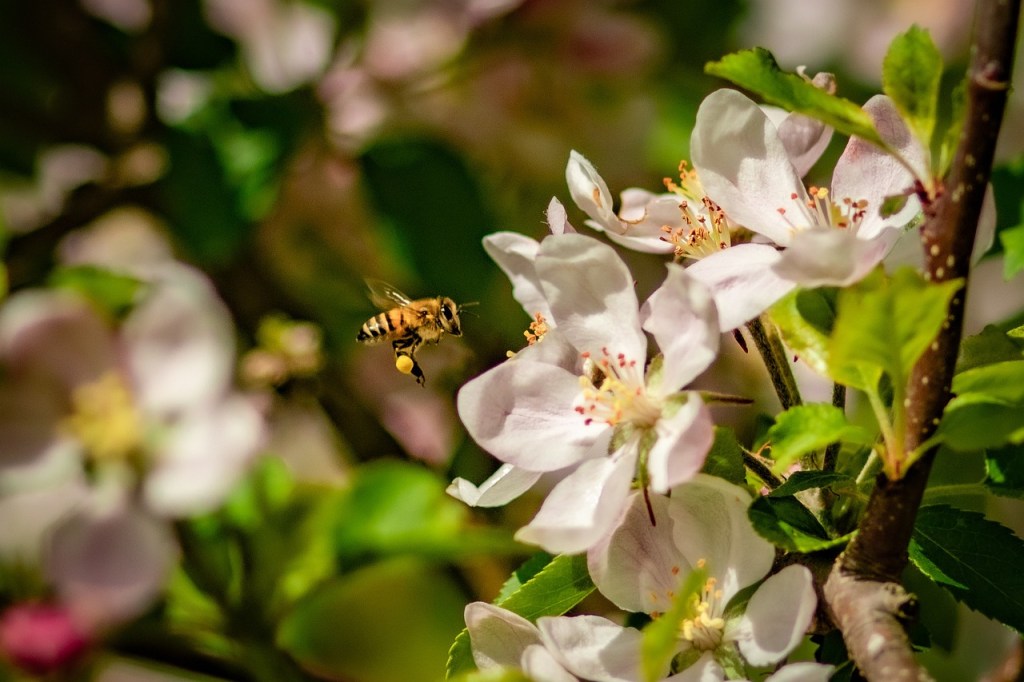
Image by Mark Michaelis from Pixabay

A feverish excitement has seized our swelling colony. There is an air of possibility and an anticipated yearning for the prolonged summer days that are swiftly approaching. Within a short space of time our colony has doubled in size, countless youthful workers have emerged every other day adding to our already reinvigorated network of honey bees. There has been a considerable contrast when making our way throughout the once dormant pathways within the hive. Not so long ago it was rare to pass another worker, the silence was prevalent and we were able to hear the creaking, groaning movements of the hive, the walls expanding and shrinking as the dampness began to dissipate as Spring approached. Now we find ourselves overjoyed with the distinctive hustle and bustle which has long been forgotten over the winter months. There is nothing quite like reentering the hive after being away on an extensive foraging expedition and being met by an extraordinary magnitude of sound and movement all at once. There is a reassuring warmth to this experience which sets our mind at ease, knowing the worst hardships are behind us and we can look to the prosperous future that awaits. Our numbers will only continue to climb, as we will soon be reinstating drones within the next month or so for the purpose of mating with Queens from neighbouring colonies. As our colony grows to an exponential size there will be a compelling opportunity to organise and prepare ourselves for a swarm. A swarm will allow us to expand our territory and continue our lineage outside the realm of our surrounding and identifiable environment. An exciting journey with new worlds and experiences that await us.
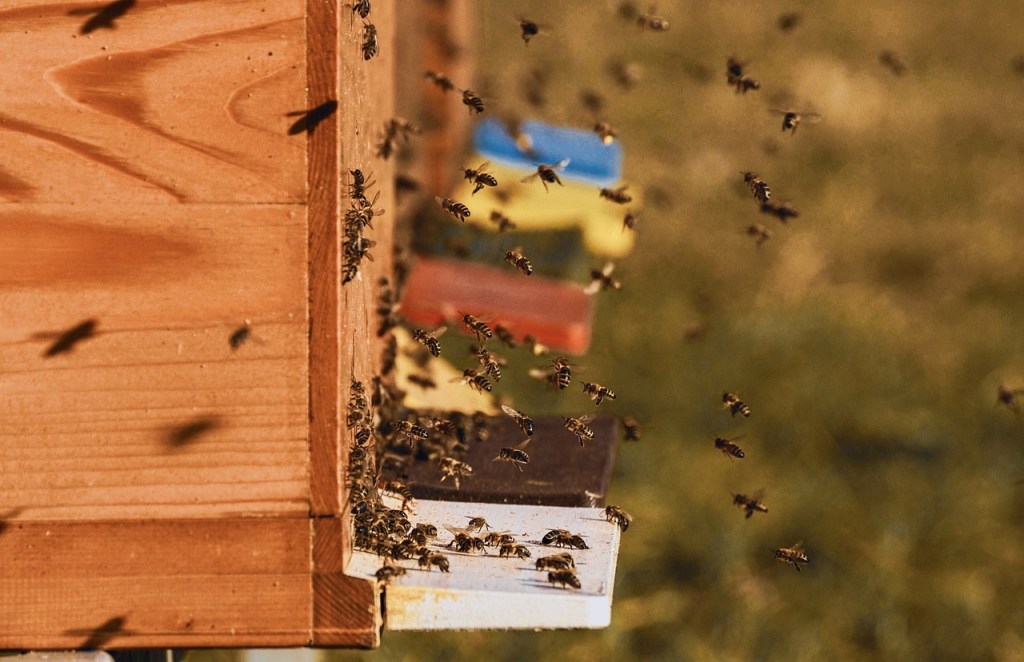
Image by 165106 from Pixabay
What we are most looking forward to, is when there is a soaring abundance of pollen and nectar available and we get to experience the tradition of participating in and observing the bewitching and ancient performance known as the waggle dance. All honey bee colonies perform this long-established tradition which involves many complex, yet unique movements distinctive to each hive. The waggle dance is performed when a scouting worker has returned from a prosperous foraging trip and have uncovered a highly sought after pollen source which they wish to communicate and share with the rest of the colony so that other scouts can make the journey to gather enough stores before the source runs dry or is discovered by another pollinator.

Image by Akbar Nemati from Pixabay

Workers in our colony come together to gather food. We try to find the most pollen and nectar in the least amount of time possible. Some flowers have more pollen and nectar than others, when a good source has been found, scouting bees recruit other scouts from our colony to find the original origin. We communicate these locations using this specific dance inside the hive. One bee dances, while other bees watch to learn the directions to a sought after food source. The dancing bee smells like the flowers, and also gives the onlooking bees a taste of the nectar that has been gathered. Smell and taste helps other colony members to find the correct location and plant. The waggle dance tells onlooking scouting bees two things about the pollen source location: the distance and the direction away from the hive. The dancing bee waggles back and forth as the worker moves forward in a straight line, then circles around to repeat the dance. The length of the middle line, called the waggle run, shows roughly how far it is to the pollen source. A dance has been carefully passed down through the many generations before us, it is ingrained in our collective memory and a core part to who we are as a species.
 The Far Orchard