
News travelled swiftly in the remaining colony that our former queen had arrived safely. A dense, perspiring air of tension had been building and circulating the colony since the swarm had taken flight. Once this news progressed through the deepest crevices of the hive there was a great collective sigh of relief, knowing that they had arrived without any misfortune. We were informed that the swarm had clustered twice on their travels before reaching their final destination. A risky manoeuvre that could have easily led the colony to their own demise if they were to cluster in an unforgiving place. The final scouted location was sanctioned by the queen to lay down new foundations to establish their future as a colony. We have yet to cross paths with them, though whispers have informed us that they have settled in a location two miles north of the primordial colony. Closer to the sea, where a higher concentration of salt in the air can be easily tasted on the tongue. We wonder how the sea will impact the taste and life span of their food and whether the ferocious winds from the northern sea will have a costly effect on the colony. It will be a long and challenging journey ahead for them and they will need to act quickly if they wish to successfully develop a strong, weather resistant hive for the colony to reside in over the looming winter months.
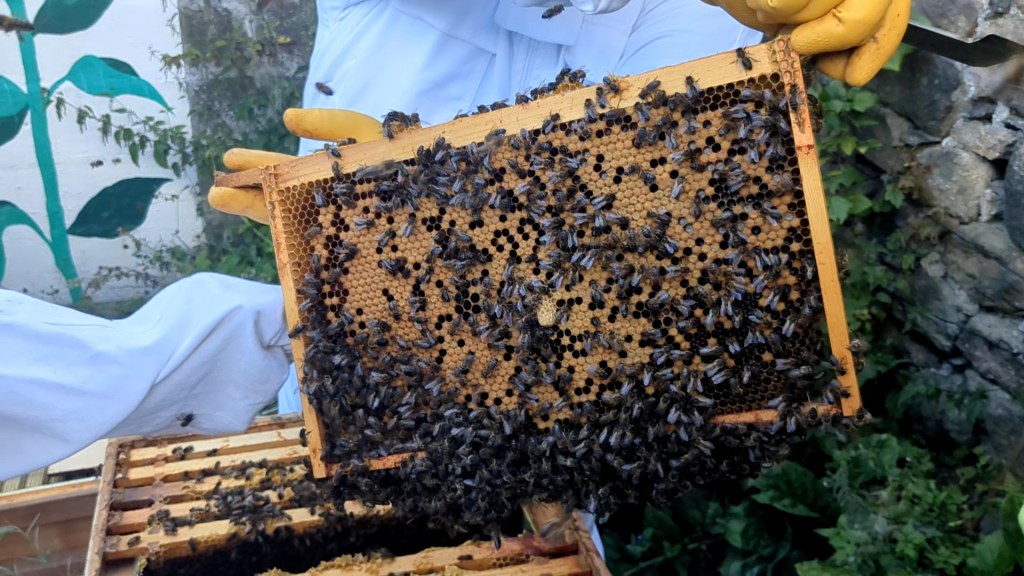
Photo courtesy of Caitlin Dick
Around the same time every year, we are transported to locations high above sea level in the regions of the Scottish hillside. Allowing us to forage the vast expanses of vibrant purple Bell Heather that dominates the landscape, thriving in the densely rich peat soil. The heather emits a luxuriously dark nectar that we turn into highly sought after honey. Bell Heather is one of the very last food sources before we must think about rationing the colony’s food supply from our spring and summer stores. We normally reside there for the duration of the heathers flowering season, this can last up to two months, while the colony can harvest great quantities in a short space of time, allowing us to make the most of the crop. Though the apprehensive presence of this plant emphasises a foreshadowing that the fruitful harvest season is coming to a close and the darker months will soon consume us.
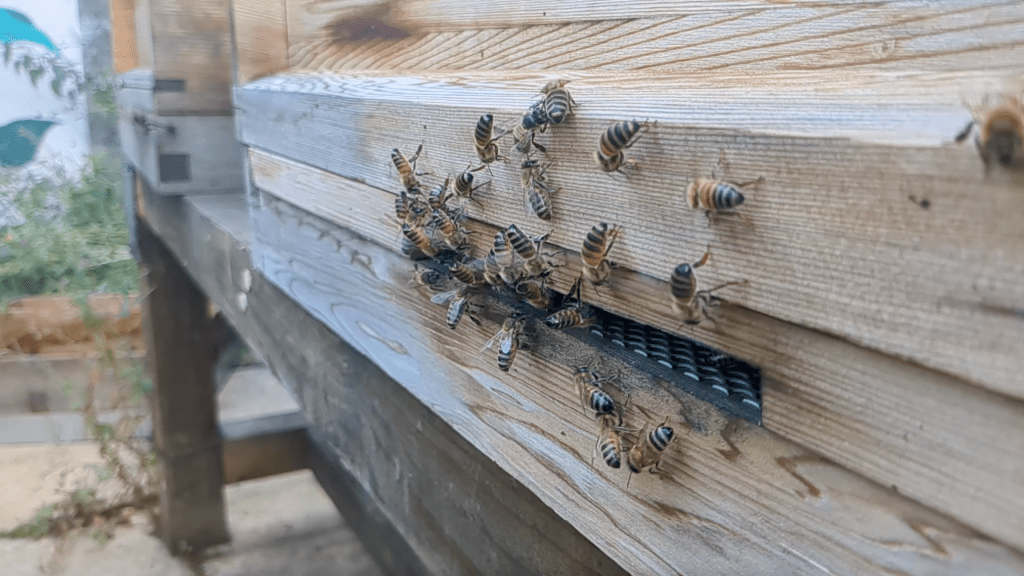
Photo courtesy of Caitlin Dick
At the beginning of August the return of our newly mated queen was celebrated in the traditional fashion of an ancestral ceremony, known as Nasonov. This has been handed down through the generations from our great foremothers and reenacted by members of the colony. We perform this intricate ceremony by raising our abdomens into the air and fanning our wings, creating music for all to hear. There is no other sound like it, an intoxicating and visceral experience which only occurs once in a lifetime for most of us. It is an exquisite ceremony to witness, which conveys our dedication and utmost respect for our new queen, demonstrating our commitment to the colony. It was only a week after the ceremony that our queen successfully started laying healthy eggs. Workers have reported that though we have been intentionally slowing down the production of new members for the colony, that our queen has been prolific in laying approximately 14,073 eggs since becoming fertile. We will need to start focusing on conserving energy and not creating wasted labour before winter. It won’t be long before our colony numbers begin to dwindle, reducing our hive to the bare minimum. An unrecognisable skeleton of its once glorious self. By only leaving the most essential and vigorous members of the colony to look after our queen, we ensure the survival of our ancestry and the sharing of our heritage with our future generations.
 The Far Orchard