We have been patiently anticipating this very moment. Each year around this time, thick, luscious fields of Borage consume the landscape surrounding our hive. A strategic move made by our ancestors long ago. The alluring blue flowers of Borage are one of our most favourable food sources. Not only because they taste delicious, but because they are reliable. Borage has a high nectar content and a long flowering life. The flowers replenish their nectar regularly, so we never go without until September is upon us, when the flowering season comes to an end and we must wait another year.
When foraging for pollen and nectar we can be quite particular when food is in abundance, it allows us to select our favourite flowers to produce the most delectable honey. Rather than taking what we can, when we can, which changes the flavour drastically. Different flowers produce distinct flavours, some light and citrusy, others rich and earthy. When we are able to be more thoughtful in our choices the rewards are memorable. However, we have been unable to take full advantage of the blossoming Borage this year because of the unpredictable July weather we have been confronted with. The weather has been very hot, humid with heavy intermittent rain making our foraging flights hazardous, and on occasion deadly. We can’t remember ever having weather like this, not in July anyway. July is the time of year where we get to rejoice in the warm, dry, long days.
Our colony has settled well after an exhaustive period of change. At the end of June, we reached peak colony numbers and took the collective decision to invest in new virgin queens. We awaited their arrival. Taking extra care of each queen cell and meticulously feeding our larvae the luxurious royal jelly. Our matriarchal queen accepted her fate and responsibility to expand our colony’s inhabitants to new and prosperous lands. We took considerable preparations in organising her expedition, and sent many brave scouts out into the wilderness to discover the best location for colonising our new hive. Only our most exceptional flyers that are especially familiar with the local area make for the best scouts. These are usually our most wise, mature and highly experienced foragers that can efficiently scour the landscape with minimum damage or loss to our colony.
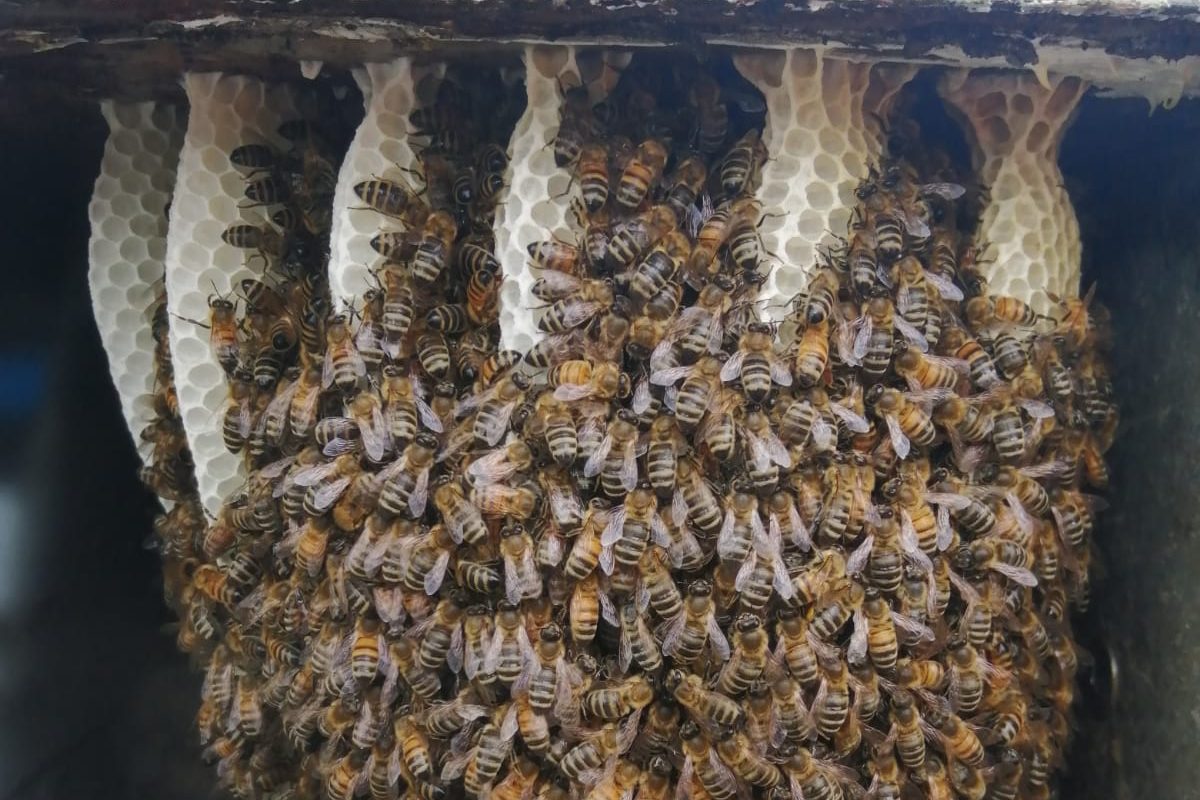
Photos courtesy of local Beekeeper Susan Caie
Our queen became very aware of the time restraints that she was held to. Each passing day, took her closer to the possibility of the virgin queens hatching. If faced with a virgin queen, the possibility of death was inescapable. Their agility, strength, and youthfulness would be on their side, a lethal combination our queen was intending to avoid.
In early July, a day before a virgin queen was welcomed and celebrated into our colony, our queen must have known her time was up, and took flight with over thirty five percent of our workers, drones and a great quantity of our honey stores. Though we would never notice the difference from an outsider’s perspective, due to the sheer size of our colony. For all honey bees, we are confronted at this stage with the difficult question we must ask ourselves. Should we stay with the new queen and continue advancing our hive, reap the rewards of an already well structured system. Or, take the unknown and uncertain trajectory, journeying with our old queen who has served us well for many years to an independant location to develop a new colony. Where do our loyalties lie? In the end, it is not truly our decision to make, but our colony’s decision. We wish the swarm and their queen good fortune on their passage and await news of their arrival. We can only hope that our new virgin queen will be as valuable as their predecessor.
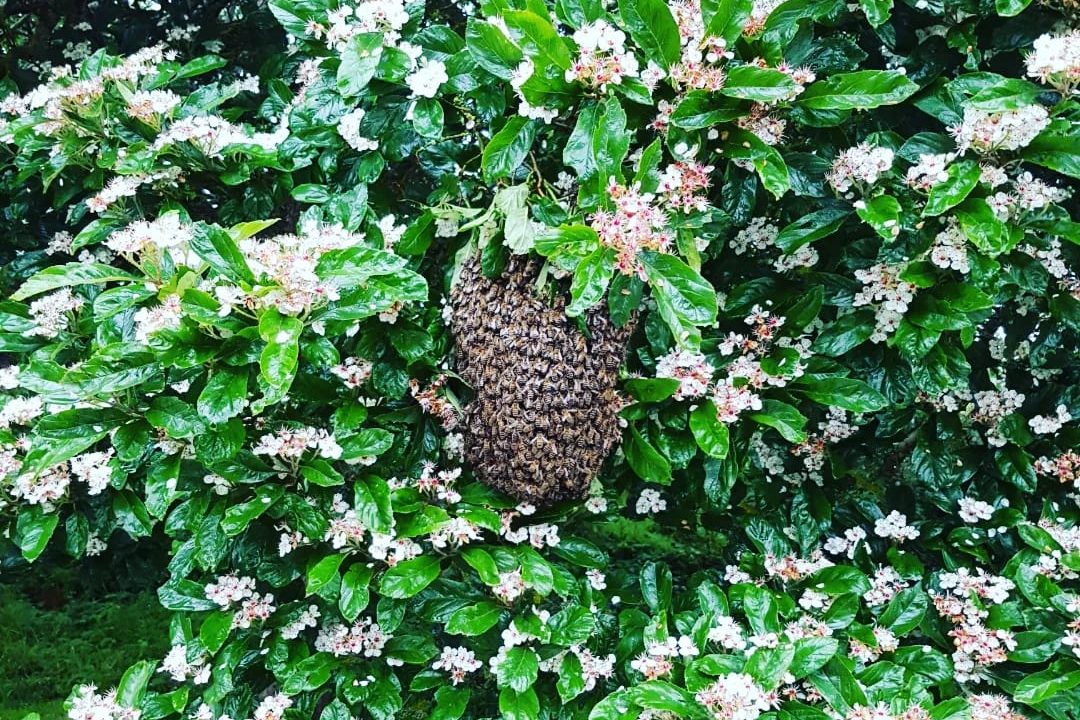
Photos courtesy of local Beekeeper Susan Caie
When our new queen hatched, the colony was in high spirits, celebrating the possibility of new and exciting beginnings. It wasn’t long before she displayed her dominating power in the hive by quickly finding and killing off any possible competition of recently emerged or soon to emerge virgin queens, by stinging her rivals with lethal venom. Though she is still very young, we trust our judgement and believe we have made the right decision to expand our territory in the best interest of the colony. Not only has our new queen made her presence known, she has already communicated to the entire hive through her unique pheromones that she has arrived, and expects the utmost effort and dedication for the coming future. Our queen has made it clear that she will not accept excuses for any individual failure to contribute to or benefit the colony. Soon she will take to the skies, pursuing the dangerous mating flight to become our fertile queen and live up to her role as part of the colony. Only then will we honestly know if she is capable of being our queen. Otherwise, if we are not satisfied with her input another decision will need to be debated and the possibility of supersedure will be discussed.
 The Far Orchard