

A welcomed, reliable, and hardy perennial known as the humble dandelion can easily be spotted against the thick, green, grassy backdrop that envelops our surroundings. The plant, which blankets the grass, has deeply notched, tooth-like leaves that are shiny and hairless. The vibrant green stems, which can tower above the soil, reaching an impressive twelve inches in height, are met by bright yellow, multi petaled blossoms. We have come to appreciate this common and abundant plant, as it is resilient in nature and can always be relied upon when our more favourable, fragile, and pollen-laden flowers become scarce due to fluctuating weather conditions. Our foraging workers have been bringing in so much dandelion nectar that they can easily fill the existing hives’ honeycomb. We often need to extend our hive’s wax comb to accommodate the nectar stores when it is dandelion season. It is important to act quickly when the plants are in bloom, taking full advantage of their delectable fruits before they have fully flowered. The yellow flowers transform into spherical, white clusters of parachute-bearing seeds that are carried away by the wind to new locations.
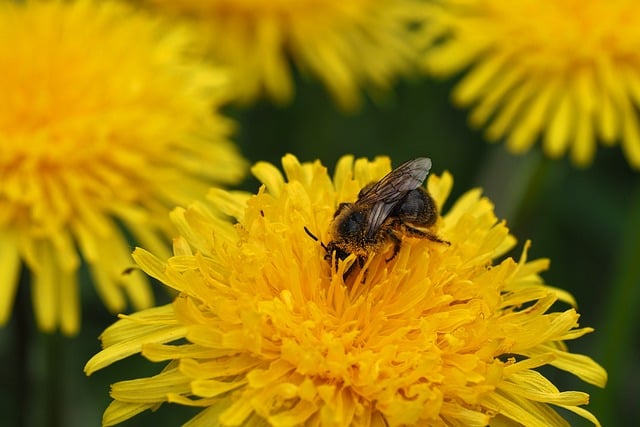
Image by Ralf Ruppert from Pixabay
With warmer temperatures comes growth; the world transforms from a muted grey to a lavish green, full of thriving life. Nectar and pollen can come in thick and fast, and as the weather has been favourably warm where we are situated, our colony is busy bringing in an abundance of nectar from the spring flowers. We have been fortunate enough to encounter a vast quantity of apple trees, which are thick with a white blush of blossoms full of sweet nectar. There is nothing quite as wonderful as an apple tree filled with an orchestra of singing honey bees working together to gather stores. Our foraging workers stick their proboscis* down into the flower to drink the nectar, while their legs become thoroughly congealed in pollen. This is known as their pollen baskets. The workers pack pollen onto their rear legs, carrying it back to the hive as efficiently as possible, with minimum wastage. Honeybees are extremely systematic in this task, unlike other bee species, such as the bumble bee or solitary bee. These species are known for being uncoordinated in this endeavour, losing much of what they have gathered due to their poorly designed pollen-collecting methods and their blundering manoeuvres while in flight. As different species of bees fly from flower to flower, collecting nectar and pollen, much of the pollen can dislodge and come loose, falling where the bee has landed. Through this transference of pollen from flower to flower, the bees accidentally pollinate the plants, allowing the trees or plants to grow delicious fruit. A beautiful coexistence which builds a favourable and welcomed relationship that benefits both plant and bee.
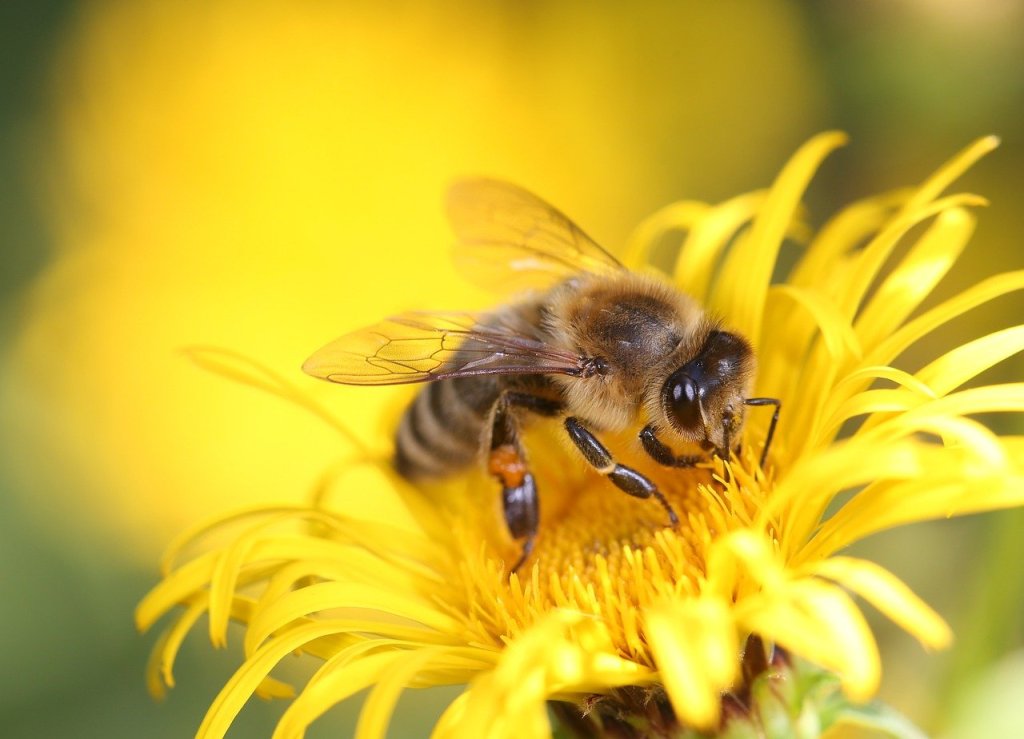
Image by lupac from Pixabay
Proboscis- The proboscis is another name for the tongue of a bee. It is like the human tongue, in that it is soft and can be extended. Relative to the size of the average honeybee, the proboscis is long, a result of evolution helping the bee to reach the centre of a flower to collect nectar.
 The Far Orchard