

With the arrival of September comes the anticipated change in the seasons. Summer transitions into Autumn with darker mornings and earlier nights creeping closer. We first notice the colour of trees beginning to transform from lively bluish greens to warm yellows blues and ultraviolet, earthly tones that remind us of our plentiful harvest and how fortunate we have been. At this time of year we are welcomed by some of the most ethereal light captured by the sun in its routinely rise and fall. A golden haze kisses our hive, casting shadows in the east and west, a delicate dew scatters crystal droplets across the long grass, turning our customary view into a maze of glimmering light. We have yet to notice the drop in temperature, though we are sure it will come soon enough.
Since becoming aware of the seasonal changes, we have made preparations and decided to start the gruelling process of casting out our drones and eliminating those who refuse to leave peacefully. They have fulfilled their role for the common good of the colony and no longer serve a purpose. With the implementation of reinforced rationing taking place, we no longer have the capacity to accommodate their needs. The drones transition from valuable allies to burdens that can starve a hive. Glutinous and futile drones would impact the survival of those who must stay on throughout the winter and into the spring, that is why we must expel wasted energy and preserve those of us who will conserve and establish the next generation of Honey Bees within our colony.
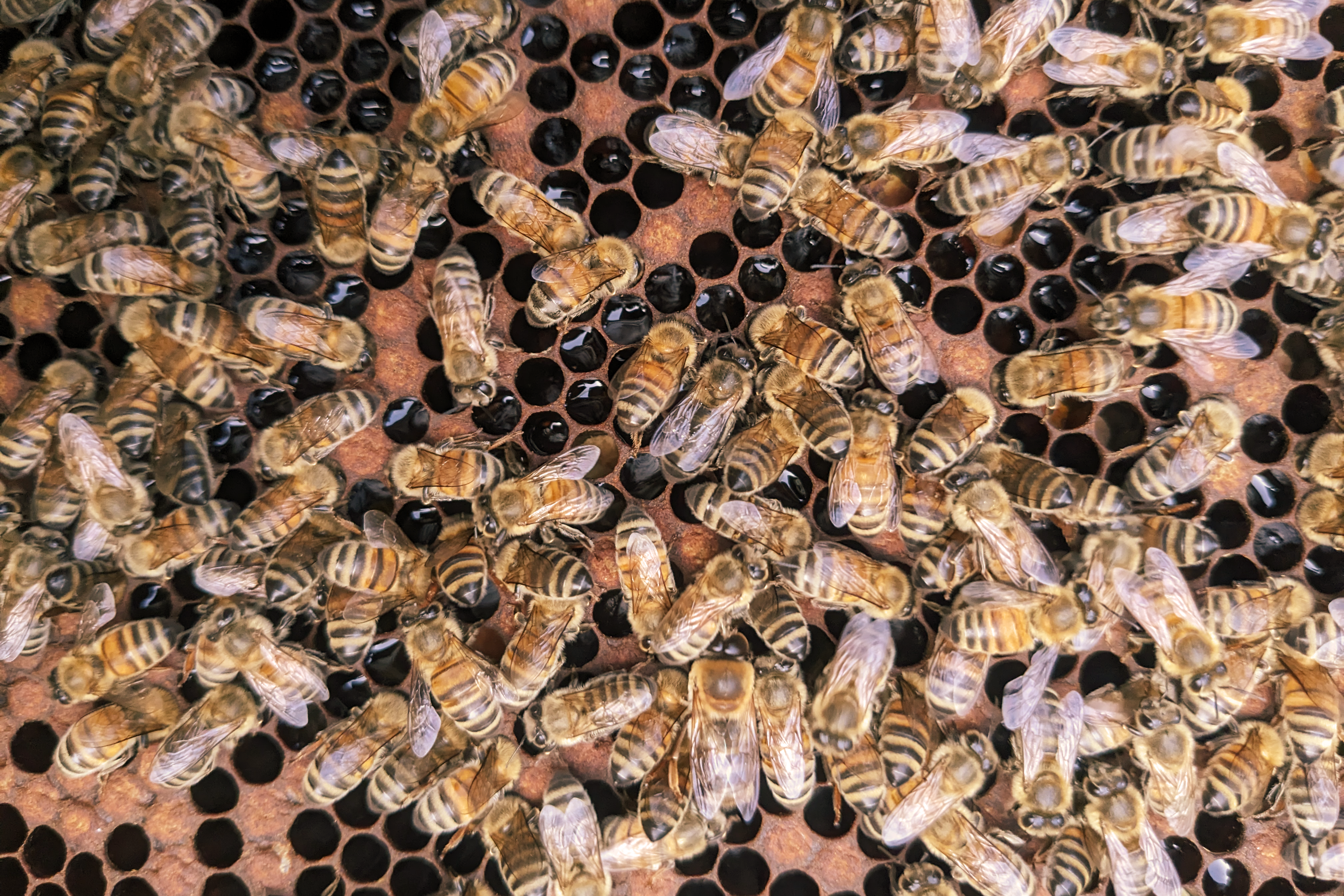
Last hive inspection of the season (20/09/2023)
Photo courtesy of Caitlin Dick

It is known by all, including rival colonies and other species that when rationing takes place, the strength of our colony diminishes and puts us at risk of becoming weak, limiting our control and ability to manage our hive’s upkeep. When workers are assigned hard rations we become undernourished on the limited pollen stores we are allocated. It is a sacrifice we must make now, so that the reward of survival can be celebrated in the spring. Though this is a challenging time transitioning from plentiful meals to excruciatingly small portions, we believe that the work we have achieved this summer will sustain us for the duration of the darker months and provide us with enough resources to minimise the possibility of any casualties.
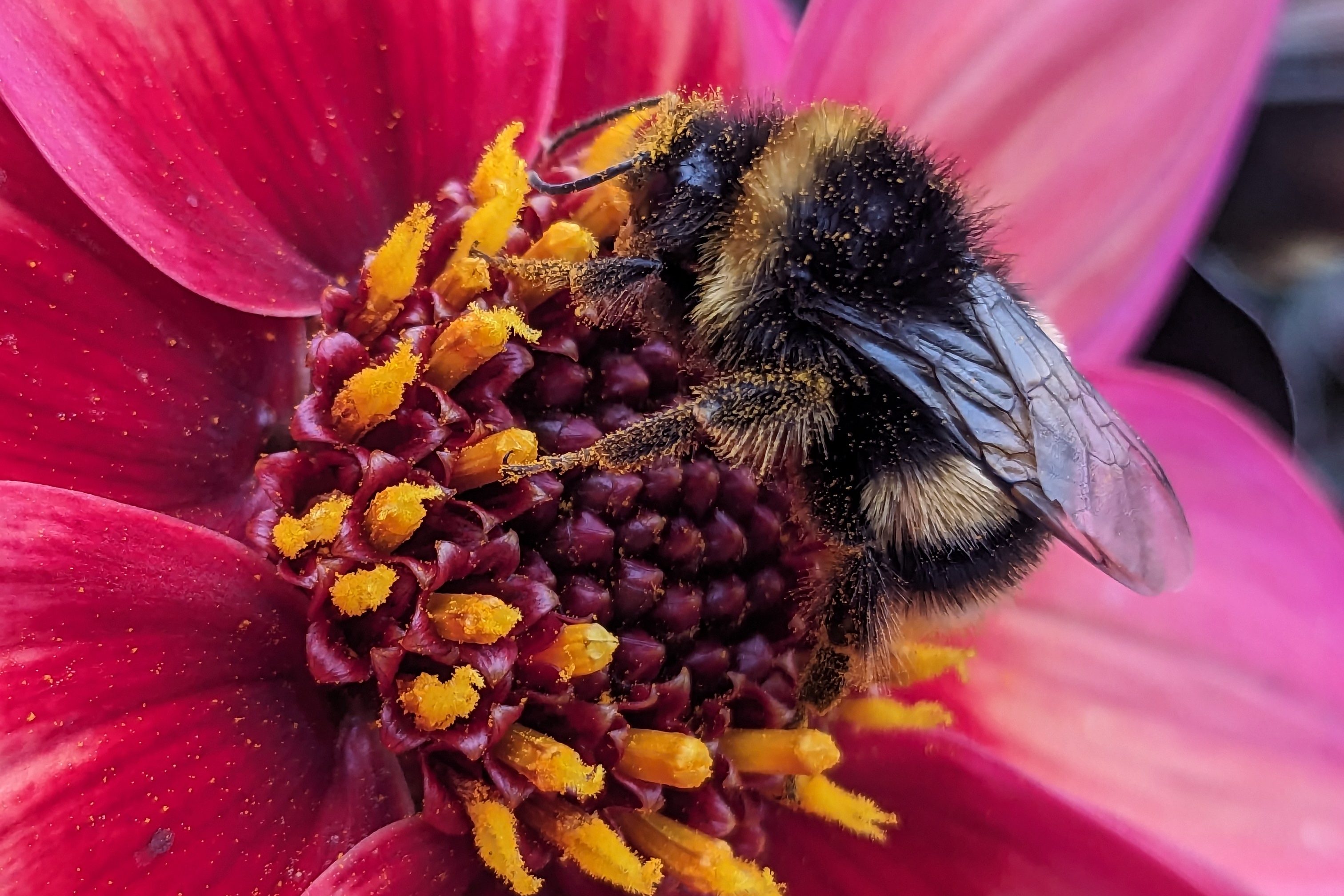
A species of Buff-tailed Bumble Bee foraging for pollen.
Photo courtesy of Caitlin Dick

Our metamorphosis is generated by our awareness of the depletion in pollen turnover, altering our being which triggers the production of specialised winter sisters. In comparison with our summer sisters who have a shorter life span and can live between 15 and 38 days, our winter sisters – otherwise known as slow sisters can live between 150 to 200 days. An unimaginable construct for most of us. The unusual act of slowing down takes place when there is a reduction in hive responsibilities, which in our case is caused by the lack of pollen available to us and the change in temperature. As a result, our Queen stops laying brood and our responsibilities reduce further. Our soul purpose then is to keep our Queen fed, safe and warm in the heart of the hive. We do this by huddling together tightly and flapping our wings to retain the heat. There is no collection of pollen, no laying of eggs, no honey or wax production or preparations for swarms in the winter months, which allows us to live much longer. It is a slower way of living and being, though it comes with its hardships.
Soon we will have to defend our hive and colony against pillaging and looting, as we do every October and November when the desperate, less successful colonies and other species struggle to prepare for the horrors of winter.
 The Far Orchard